Prequels are always extremely tricky to pull off, as they inherently put you in a corner narratively and set limitations of where your story can go. This isn’t to say that compelling stories can’t be told within these confines – especially when it comes to prequels that are so far removed from the events and characters of the original material that they have to rely on thorough character work and establishing its own identity to make you invested instead of simple fanservice or callbacks to things you remember; something that HBO’s House of the Dragon did pretty spectacularly last year… and, on the flip side, something I found the Fantastic Beasts franchise did extremely poorly. So, when it comes to The Ballad of Songbirds and Snakes, it stands in an interesting place where the novel that it is based off of doesn’t try to launch another series of books, but rather is a long, character-focused story about the corruption of Coriolanus Snow.
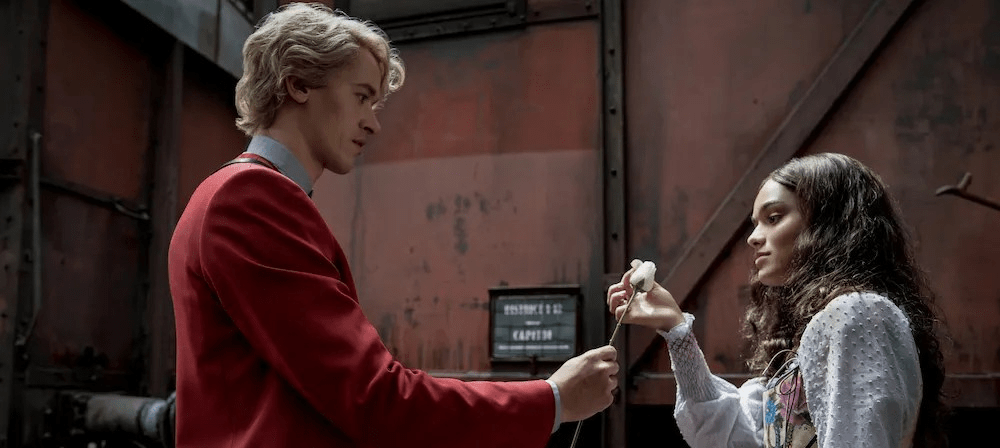
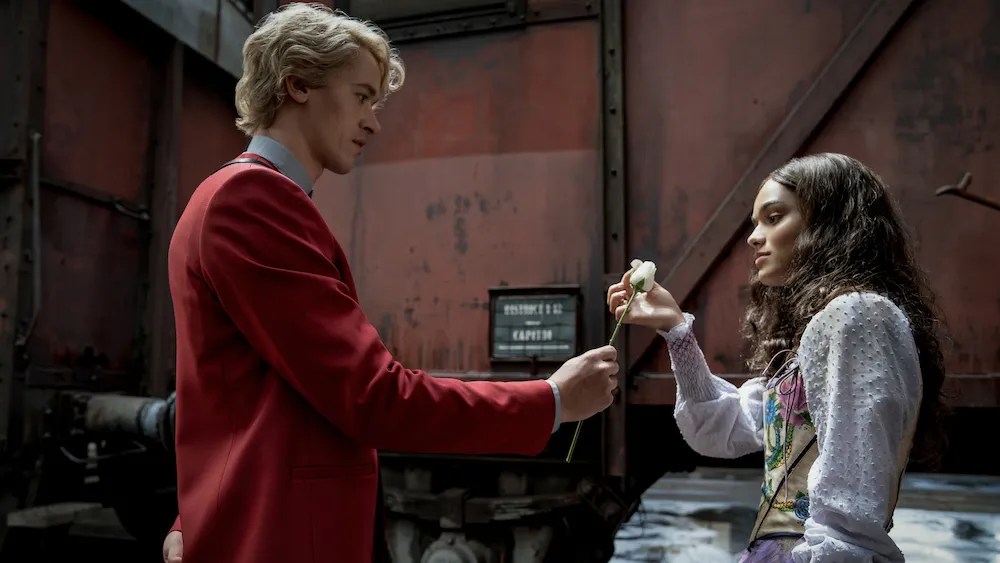
The film follows a young Coriolanus Snow (this time played by Tom Blyth) decades before he became the tyrannical President of Panem or Katniss Everdeen entered the arena. After the Snow family falls on hard times in a post-war era in the Capitol, Snow attempts to make a name for himself to save his families’ legacy. However, when he’s assigned to mentor a tribute from District 12 named Lucy Gray Baird (Rachel Zegler) for The Hunger Games and watches her captivates all of Panem with her charm and style, he sees an opportunity to shift both of their fates. Throughout this journey, we see how Snow not only rises to power and the dark paths he goes down, but we also see how The Hunger Games become what they are in the original films – a terrible event not made simply for punishment, but for spectacle and control.
I’m usually not a fan of when certain directors spend too much time in one franchise, but in the case of Francis Lawrence, I find him to be such a perfect fit for the world and characters that it never bothers me. Lawrence directed the last three films of the franchise and feels synonymous with its identity at this point. Lawrence has really keen eye for attention to detail and truly knows how to balance both spectacle and quieter character moments in equal measure, something that feels pivotal to a franchise like The Hunger Games. With Songbirds and Snakes, Lawrence delivers the longest film of the franchise by-far with a 158-minute epic that feels the least restrained of the bunch. The film is full of spectacle and action as you’d expect, but more-so than any of the others, it also is not afraid to wallow in the misery of the districts and the harshness that these games bring out in people.
Where the original series was told from the perspective of the rebels, Songbirds and Snakes feels like a nice change of pace due to it focusing in on a world of political intrigue, backstabbing, and formatting how The Hunger Games both originated and evolved throughout the course of history in this world. Tom Blyth does a wonderful job at playing Coriolanus Snow here, with a refreshingly restrained performance that quietly frightens you as you see the torment and urge to become something greater consuming him. Every questionable and morally grey situation he finds himself in has inherent tension in each scene, but the context of knowing exactly where Snow ends up decades later makes them feel all the more depressing and scarier.
On the flip side, Snow’s dynamic and relationship with Lucy Gray is one of the most fascinating in the film due to how much it brings out both the best and worst in Snow. She helps him discover a sense of connection and mutual affection, but also brings out some of his deep-rooted insecurities and anxieties. Rachel Zegler and Tom Blyth have really exceptional chemistry together, and both turn-in equally fantastic performances as-well. As usual with the franchise, the supporting cast opts to steal the show, with Viola Davis, Peter Dinklage, and Jason Schwartzman who all make an impression in their limited screentime by chewing the scenery like no one’s business.
At a whopping 158 minutes, does The Ballad of Songbirds and Snakes feel a bit bloated? Maybe. An argument could have even been made that this, more-so than the Mockingjay films, could have been split into two-parts to fully round out the story and characters. On the other hand, the film moves at an extremely brisk pace, and I appreciate how singular it feels – it never feels like a pointless addition to the franchise or as if it’s setting up further sequels, but instead opts to be a completely dark and compelling character study that humanizes a character we thought we hated. Some will say the third act is a bit underwhelming, but I appreciate the truly understated nature of the film and how it doesn’t compromise its identity for the sake of being more accessible. There’s a really great balance here of exciting set-pieces and thought-provoking character moments, and I believe that makes it one of the best of the franchise.
4/5

 Films for Breakfast
Leave a comment