
Kogonada has had a fascinating career trajectory. He began making video essays in 2012, which soon led to collaborations with companies like Criterion and Samsung, as well as teaching masterclasses. In 2017, he made his feature directorial debut with Columbus – a film that holds deep personal meaning for me. It arrived at exactly the right moment in my life, when the struggles of its main character mirrored my own. I was floored by Kogonada’s ability to create such a tender canvas for his characters to reflect and connect, and by how effortlessly he could captivate an audience through nothing more than dialogue between two people. That talent feels all the more fitting when you consider that one of his most influential essays was on Richard Linklater’s Before Trilogy.
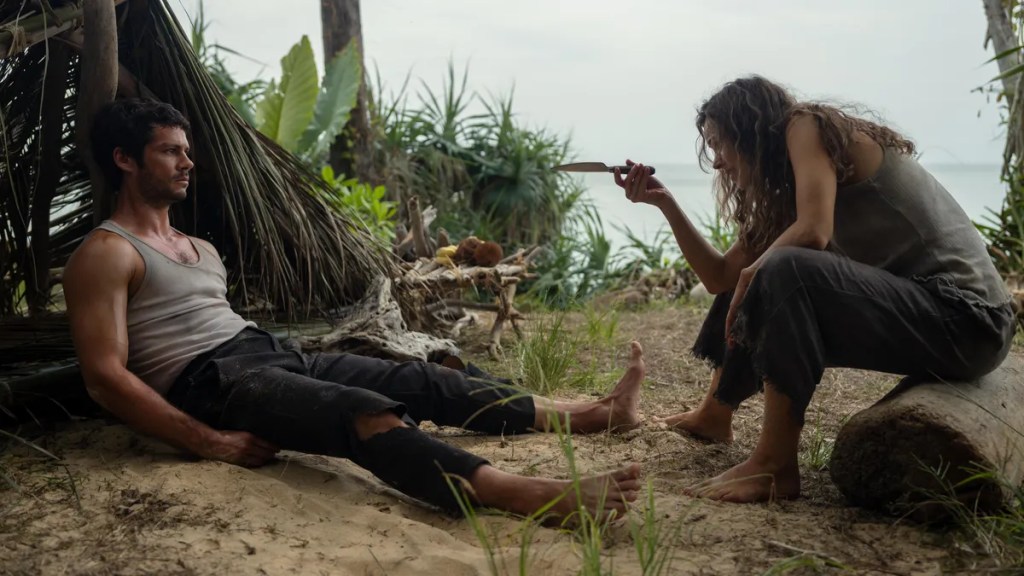
I also enjoyed Kogonada’s second feature, After Yang, as well as seeing him step into the Star Wars universe with an episode of The Acolyte. That said, A Big Bold Beautiful Journey has been the one I’ve been anticipating for quite some time. Its premise alone feels like a return to what I loved about Columbus: two strangers, Sarah (Margot Robbie) and David (Colin Farrell), embarking on an unimaginable and emotional journey that ultimately binds them together. My only real hesitation going in was that this is the first film Kogonada has directed without also writing the screenplay. This one comes from Seth Reiss, who previously wrote The Menu – a film I enjoyed, though I wondered how his sensibilities would mesh with Kogonada’s style.
Having now seen the film, I’d say my hesitations were somewhat warranted. On one hand, Kogonada’s directorial style feels perfectly suited to this fantastical world. It’s a joy to see him working with a larger budget, resulting in several dazzling, wonder-filled sequences. His collaboration once again with cinematographer Benjamin Loeb, who also shot After Yang, yields some truly breathtaking imagery, beautifully complemented by Joe Hisaishi’s stirring score that elevates these fantastical moments nicely.
On the other hand, Seth Reiss’ screenplay proves a bit of a mixed bag. There are genuinely tender moments, such as Sarah’s interactions with her mother, or David’s confrontation with his adolescent self, that showcase Reiss’ strengths. But for a film so intent on building a romance between its two leads, the writing in the romantic scenes often fall flat. The supposed chemistry feels more like an afterthought. Farrell and Robbie are among the finest actors working today, and while there are fleeting moments where sparks fly, I found myself wishing for a deeper connection between their characters – something more resonant than the familiar “hurt people hurt people” dynamic.
Individually, Farrell and Robbie both give strong performances, though I think Farrell often reaches for greater emotional heights. There’s something compelling about his character – a man who is traditionally handsome, yet disarmingly vulnerable and tender, weighed down by unresolved trauma and a broken heart. Several moments with him really carried the film for me, especially a standout sequence set during a high school musical he once performed in.
On paper, I love the sentiment of staging a romance within this premise: that in order to form meaningful emotional connections, we must first confront our pasts: sometimes literally, in this case. Partners can help us find empathy and solace in experiences too heavy to face alone, but they can’t resolve them for us. That was my ultimate takeaway from the film, and I wish it had been more fully fleshed out, rather than left feeling half-baked.
The opening stretch, particularly the melancholy wedding sequence, a hilarious bit with David attempting to rent a car, and the aforementioned high school musical, showcases the film at its best. I preferred it when it leaned into surrealism paired with heightened emotion. And while there are moments that still deliver, such as a moving third-act sequence between Sarah and her late mother, the dialogue between those peaks often feels forced and repetitive. Too often, exchanges boil down to recycled variations of “we can’t be together, we hurt people!” or “uh, did that just happen?”, diluting the characters and robbing the powerful moments of their impact.
What I ultimately wanted was more genuine connection between David and Sarah beyond their shared sense of personal failure. Robbie and Farrell are certainly game, and their charisma occasionally transcends the weaker romantic writing, but I was left wishing for a romance that felt as layered and affecting as their individual journeys through the past.
By the end, A Big Bold Beautiful Journey is both a bafflingly strange studio film – lavishly produced to tell a quirky, time-and-space-spanning odyssey about processing trauma – and, in hindsight, remarkably straightforward. It’s a pleasant and breezy watch, though one that feels like a bit of a missed opportunity. Still, I’ll always root for Hollywood to take risks on projects like this: films that rely on the power of great actors working off one another’s chemistry. Admirable in its ambition and enjoyable in stretches, this is a film I’m glad exists, even if it won’t resonate with everyone.

 Films for Breakfast
Leave a comment