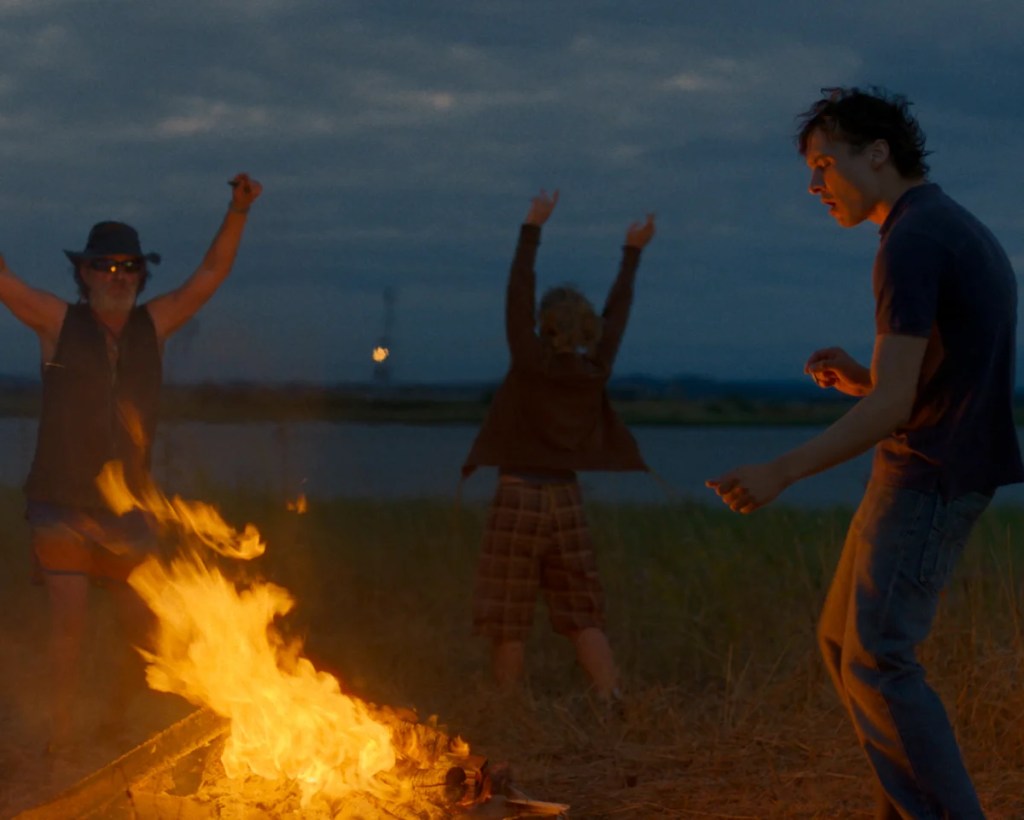
Harris Dickinson has quickly emerged as one of the most fascinating and talented young actors working today. From Babygirl to Triangle of Sadness, he’s consistently proven himself as a performer with range, intelligence, and emotional depth. Now, at just 29, he makes his directorial debut with Urchin. The film follows Mike (Frank Dillane), a young addict living on the streets of London who’s offered a chance at redemption after a devastating incident. But as Mike begins his journey toward recovery, his path soon spirals into a harrowing odyssey – one that may prove impossible to escape.
Directorial debuts from actors usually fall into one of two categories – they’re either awkward, well-intentioned flukes from performers testing their strength behind the camera, or they reveal a genuine talent who’s been quietly learning from years spent on set. In the case of Harris Dickinson, I’m largely impressed by how much he accomplishes with Urchin. While the film bears a few hallmarks of a first feature – a slightly front-loaded story that tries to pack in a bit too much, it’s also refreshingly assured, full of energy, and distinct in its voice.
Dickinson’s direction is genuinely striking. From the opening moments, it’s clear where his priorities lie as a filmmaker. The way he frames his protagonist, Mike, as a near-mythic figure doomed to repeat self-destructive cycles, is fascinating. One of the first things we see Mike do is horrendous, yet Dickinson never sensationalizes it; instead, he challenges the audience to stay with him, to consider whether a person so far gone can still be capable of change.
The film evolves into a riveting, propulsive, and deeply emotional character study — one that feels at once personal and purposefully withheld, forcing viewers to constantly question Mike’s motives and capacity for redemption. Frank Dillane is outstanding in the lead role, delivering a performance as volatile and unpredictable as Dickinson’s vision demands. There’s a restless, boyish charm to him that keeps you watching even when Mike seems irredeemable.
On a technical front, Urchin impresses without ever feeling overly showy. Josée Deshaies’ cinematography is raw yet composed, capturing London’s underbelly with a poetic edge, while the score by Scott O’Connell and Archie Pearch (who also serve as producers) gives the film a haunting, propulsive rhythm that deepens its emotional pull. All of this culminates in a film that has shades of something akin to Good Time or After Hours, yet also feels distinclty original.
With Urchin, Harris Dickinson proves himself not just a gifted actor (he also has a tremendous yet brief supporting role here) but a filmmaker with a clear, confident voice. It’s messy and rough-edged in places, as many debuts are, but it pulses with sincerity, vision, and a genuine curiosity about people at their lowest. If this is where Dickinson’s directorial career begins, it’s an incredibly promising start.

 Films for Breakfast
Leave a comment