It feels like the romantic comedy genre has been slowly but surely making a comeback over the past few years. Even beyond traditional rom-coms, I genuinely believe that not only the massive success of Barbie, but the quieter success of films like The Housemaid, have proven to studios that movies aimed specifically at women carry just as much commercial and cultural weight as the massively dominant, male-focused market that continues to define much of the film industry.
With that in mind, it feels fitting that we’re now approaching the moment when the floodgates finally open on Emily Henry adaptations. For those unfamiliar with her work, Henry has been writing for quite some time, but she truly broke through with her 2020 romance novel Beach Read. Since then, she’s maintained an impressively consistent rhythm in releasing a new novel every year. And for full transparency, I admit that I’m a huge fan of her work. My girlfriend initially got me into her writing, and I was admittedly reluctant at first – call it unfair bias if you want; it probably was.
That hesitation vanished almost immediately once I started Beach Read. Henry’s writing style clicked for me right away. These aren’t traditional romance novels (not that there’s anything wrong with that!); instead, they feel like literary companions to the romantic comedies I grew up loving that came out between the 80s and 2000s. Reading her work, I constantly found them similar to films like You’ve Got Mail, 10 Things I Hate About You, or When Harry Met Sally. Her ear for dialogue, her understanding of character, and her ability to balance emotion, romance, and comedy is genuinely sublime.
Out of Henry’s catalogue, People We Meet on Vacation has always been my favorite, and I long suspected it would be prime adaptation material once studios wised up to her appeal. After years of anticipation, the film is finally here – albeit exclusively and immediately on Netflix. While I appreciate much of what Netflix produces and consider a great deal of their film and television output to be great, it’s hard not to feel that they’re leaving money on the table by skipping a theatrical release. This is an utterly delightful film, and one with such broad, traditional appeal that it easily could have enjoyed a lengthy box-office run for casual movie goers.
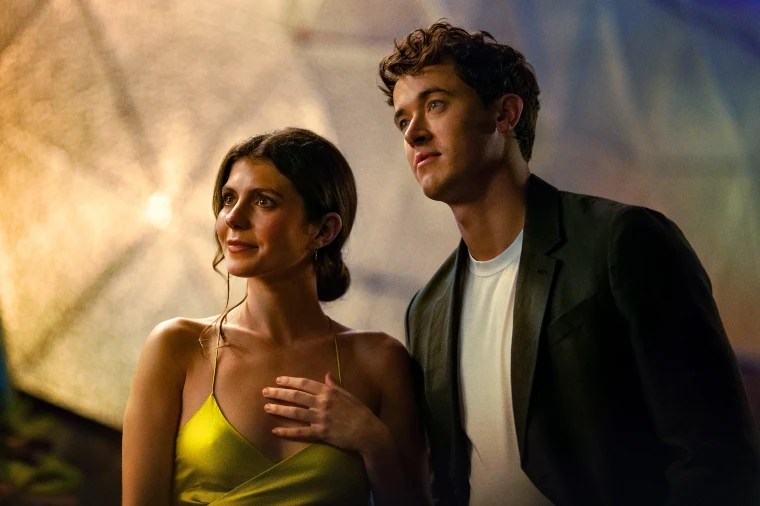
The story follows Poppy (Emily Bader) and Alex (Tom Blyth), two friends who couldn’t be more different if they tried. Poppy is adventurous, bubbly, and free-spirited; a travel writer paid to explore the world and chase new experiences. Alex, by contrast, is reserved, schedule-oriented, and perfectly content spending time at home with a good book. Despite their differences, the two share an inseparable bond, formed after their first reluctant trip together. They make a pact: no matter what’s happening in their lives, they’ll reunite every summer for a vacation.
Casting is half the battle with adaptations like this, and thankfully, Emily Bader and Tom Blyth are excellent as Poppy and Alex. Their chemistry is off the charts and aligns almost exactly with how I imagined the characters while reading the novel. Blyth nails Alex’s observant, introverted nature, as well as his quiet tendency toward control. Bader, meanwhile, is as perfect a Poppy as one could hope for, capturing her infectious energy with an endearing performance full of heart and warmth. Together, they bounce off each other in a way that feels completely natural and deeply charming.
One of the film’s biggest surprises is just how good it looks. Cinematographer Rob Givens, who frequently collaborates with director Brett Haley, brings a polished visual style to the project. Each destination Poppy and Alex visit feels distinct and vibrant, while the more intimate moments are beautifully lit. A standout sequence set in a motel room during a rainstorm is especially striking, showcasing the film’s visual confidence.
Book adaptations are always easy to nitpick, particularly when it comes to what’s left out or altered. While there are a few lines of dialogue from the novel that I wish had made the cut, it’s hard to feel anything but grateful that the film so thoroughly captures the characters and emotional core of the story. What makes People We Meet on Vacation, and other romances like it, so effective is how Poppy and Alex’s clashing personalities are precisely what draw them together.
It’s in the quiet moments, the push and pull between them, and the way they observe each other’s relationships with others that their true feelings come into focus. The film does an excellent job lingering on those moments of longing and unspoken emotion, letting them build-up for real emotional pay-off.
This isn’t a game-changing film – and that’s exactly the point! It’s not trying to reinvent the wheel or present itself as high art. Instead, it’s an old-fashioned romance done right. You care about the characters, you’re invested in whether or not they’ll finally kiss, and in the meantime, it’s simply a joy watching them navigate their vacations and emotional highs and lows together. Given how often adaptations of beloved books miss the mark, it’s hard not to feel genuinely happy that this one turned out as well as it did.



 Films for Breakfast
Leave a comment