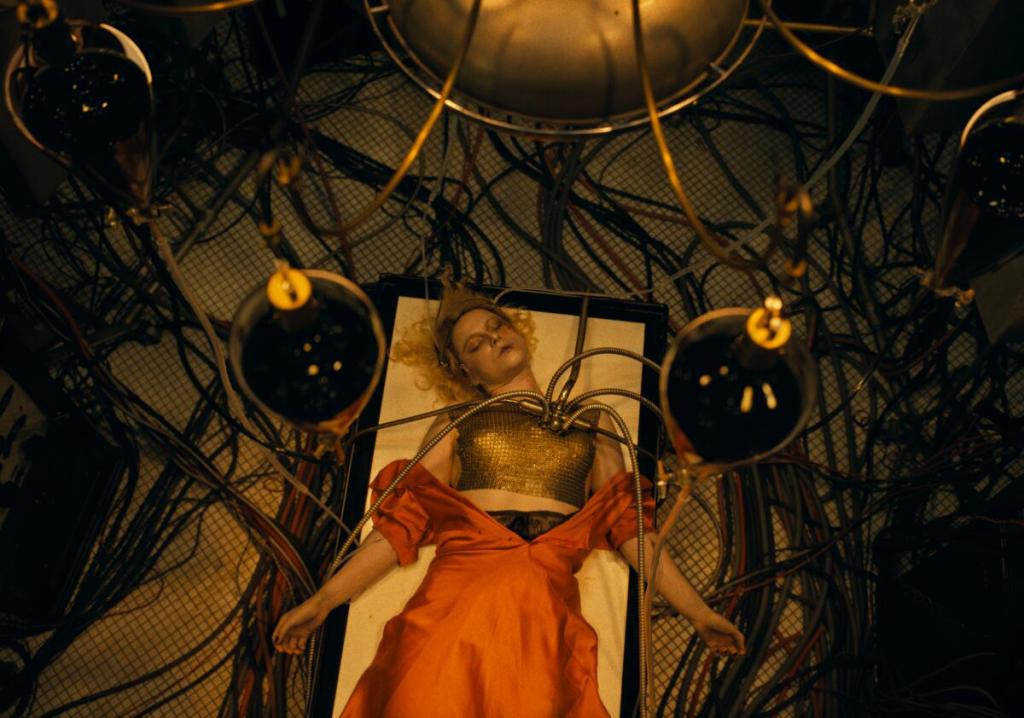
As potential buyouts swirl on the corporate side, Warner Bros. as a film studio feels like it’s operating at an all-time high. Nearly every recent release has struck a compelling balance between originality and genuine audience excitement. Even last year’s IP-driven outings like Superman and Final Destination carried a distinctly filmmaker-first sensibility. On paper, The Bride! feels like a natural extension of that hot streak: Maggie Gyllenhaal, coming off an acclaimed debut, handed a $100 million budget, a hard R-rating, and the keys to a darker, period-set reimagining of The Bride of Frankenstein, led by two Oscar-nominated actors (and likely future winner Jessie Buckley). It sounds like a blank-check dream.
And yet, the film ultimately feels like a reminder that blank checks don’t always cash. To start with the positives: Jessie Buckley is doing bold, unhinged work here. Her performance won’t land for everyone, but she fully commits to the chaos of it, and there’s something admirable about how fearlessly she swings. Christian Bale is similarly committed, capturing the physicality and mannerisms of Frankenstein’s monster while carving out flashes of genuine humanity underneath. On a technical level, the film often dazzles. Cinematographer Lawrence Sher gives the movie a rich, textured look, and the production, costume, and makeup design frequently elevate the material, lending it a striking visual identity.
Unfortunately, that visual ambition isn’t matched by narrative cohesion. Gyllenhaal has undeniably crafted something original and aesthetically extravagant, but the screenplay and overarching vision never quite coalesce. At 127 minutes, the film feels exhausting despite not covering much narrative ground. That isn’t inherently a flaw; plenty of great films thrive on intimacy and focus – but The Bride! lacks the thematic urgency or tonal commitment to justify its sprawl. It gestures toward big ideas without ever sharpening them, spinning its wheels long after its initial intrigue has worn off.
Several creative choices feel especially baffling. Buckley plays both the Bride and Mary Shelley, who periodically breaks the fourth wall to converse with her creation. It’s a fascinating device at first, suggesting a meta-textual exploration of authorship and agency, but it ultimately leads nowhere. By the end, you’re left wondering why it was included at all. The same goes for the detective subplot involving Penélope Cruz and Peter Sarsgaard, whose pursuit of Frank and the Bride drains what little momentum the film builds. Their scenes are the weakest in the film, bloating an already messy screenplay and further muddying its tone.
Even with all these uneven elements, the film might have worked if you felt deeply invested in Frank and the Bride – but you simply don’t. I understand what Gyllenhaal is reaching for: a 1930s, New York gangster-inflected backdrop; a reframing of the Bride as a woman seizing agency in a world shaped by male cruelty. None of that is lost on me. But the film asks you to care about these characters without giving you a compelling reason to. As strong as Bale and Buckley are individually, they share little chemistry, and their relationship never develops the emotional weight the story depends on.
It feels reductive to pin the blame on any one person, because the film gives the impression of a project that was unwieldy from the outset. Still, the direction and screenplay bear much of the responsibility. When even seasoned performers like Sarsgaard and Cruz seem adrift, it’s hard not to look at the material they’re working with. The tone lurches, the themes blur, and as an audience member, there’s very little to hold onto.
By the end, The Bride! doesn’t collapse so much as it depressingly and slowly flounders it potential. I wouldn’t call it outright terrible – there are undeniably impressive visual flourishes, and I’ll always respect a filmmaker taking a massive swing. But for all its ambition, the film feels hollow and uneven, more enamored with its own ideas than committed to refining them in an entertaining or interesting package. I’ll always champion large-scale, passion-driven projects, but this is one that may have benfited from a more focused screenplay and vision behind the camera.
 Films for Breakfast
Leave a comment