Dinosaurs remain one of Hollywood’s biggest draws – just look at the Jurassic Park/Jurassic World franchise. Ask yourself: is it really the strength of the IP? The cast changes almost every movie, the story arguably peaked with the original, and there’s barely a meaningful narrative thread connecting the sequels. Yet every new installment seems destined to flirt with (or outright surpass) a billion dollars at the box office. That’s not because audiences are deeply invested in the characters played by Chris Pratt or Bryce Dallas Howard. It comes down to one thing: dinosaurs.
And yet, despite that obvious appeal, we rarely get dinosaur movies outside of the Jurassic franchise. Aside from the upcoming Paw Patrol threequel featuring dinosaurs and the much-maligned 65, the subgenre has been strangely absent. That’s where David Robert Mitchell’s The End of Oak Street comes in. Set in the 1980s, the film follows a family whose quiet suburban neighborhood is suddenly ripped from reality by a mysterious cosmic event and deposited somewhere unknown. Is it the distant past? Another world? A different dimension entirely? No one knows. All they know is that they’re surrounded by dinosaurs – and a whole lot of them.
From the moment The End of Oak Street begins, it commands the screen with remarkable confidence and assured direction. David Robert Mitchell blends many of his signature sensibilities here. The DNA of It Follows is highly visible – its fascination with youth, mounting dread, and bursts of shocking violence are all present – but I also found myself thinking about his debut feature, The Myth of the American Sleepover. That film so beautifully captures the awkwardness and uncertainty of adolescence, and Mitchell brings that same empathy to Oak Street‘s younger characters. At the same time, the film toys with genre in the playful, unpredictable way that reminded me a lot of Under the Silver Lake.
On a more fundamental (but no less satisfying) level, Mitchell is simply having a blast behind the camera. His handling of the action is exhilarating, blending practical sets and effects with CGI in a way that makes the world feel tactile and genuinely lived-in. Every dinosaur encounter crackles with pulse-pounding tension, and Mitchell stages each set piece with remarkable clarity and suspense. By smartly building the film around one thrilling sequence after another, The End of Oak Street becomes an absolute roller coaster from start to finish.
Even beyond the spectacle, Mitchell wrings an incredible amount of terror from the simple premise of what dinosaurs would actually be like to ordinary people. They genuinely haven’t felt this frightening since Spielberg’s original Jurassic Park. Some sequences are shockingly intense, pushing the PG-13 rating right to its breaking point with moments of genuinely upsetting violence. That’s ultimately what made the film evoke the spirit of the classic Amblin adventures for me. Not because it’s trying to imitate them, but because it shares their willingness to challenge audiences – to unsettle families in service of making a film with real emotional weight, genuine stakes, and palpable tension.
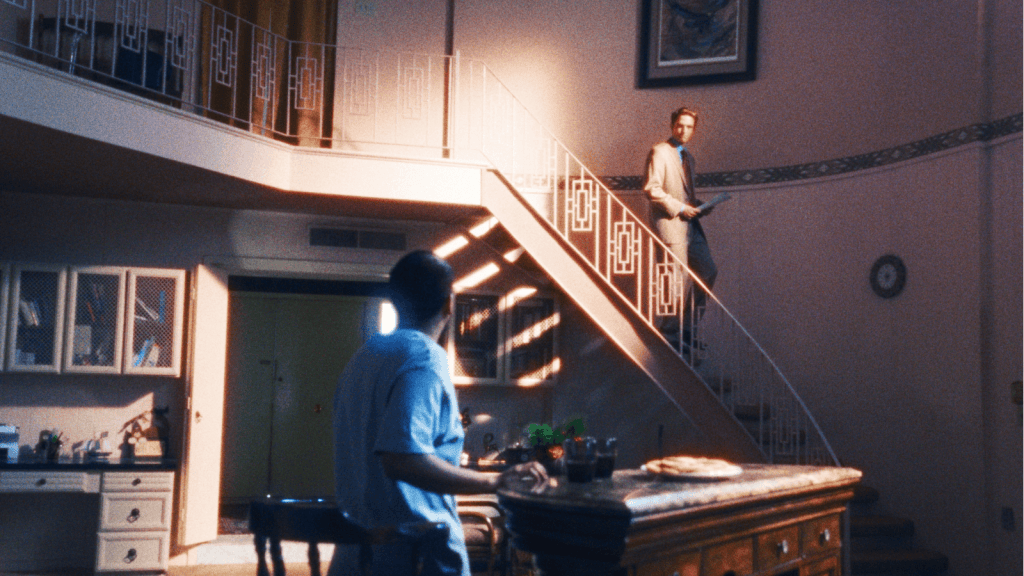
On a technical front, the film is exceptionally accomplished. The sound design, visual effects, production design, and costumes are all first-rate, creating a world that feels immersive and tangible. Michael Giacchino’s score is another standout, proving just as effective during the film’s exhilarating action sequences as it is in its quieter, more intimate family moments. Michael Gioulakis’ cinematography is equally impressive, full of inventive visual flourishes that elevate every scene. He and Mitchell clearly have a great deal of fun experimenting with split-diopter shots, giving the film a distinct visual identity.
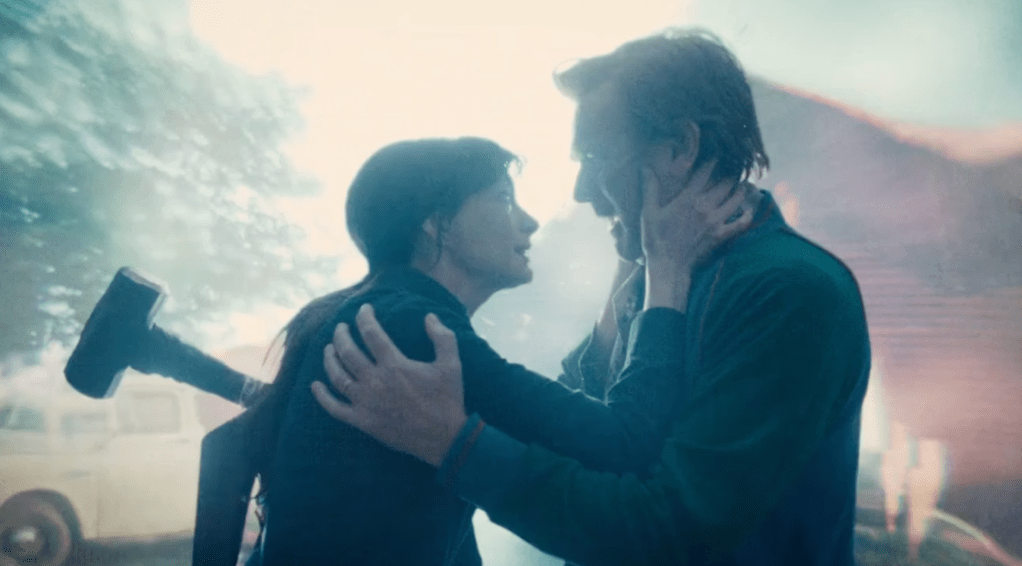
Even with all of its technical achievements, I don’t think the film would work nearly as well without the strength of its performances. Ewan McGregor and Anne Hathaway are immensely endearing as Greg and Denise, bringing warmth and authenticity to the parents at the center of the story. Their struggles as a couple, and the bond that ultimately endures even through the darkest moments, are genuinely moving. Maisy Stella and Christian Convery are equally impressive as their children, capturing both the fear and resilience of kids thrust into an unimaginable situation. By the end, they feel like a truly authentic family, and that emotional foundation gives the film much of its power.
One of the film’s most compelling ideas is the way David Robert Mitchell weaves its time-travel premise into Greg’s emotional journey. Through Ewan McGregor’s performance, Greg feels like a man out of time, desperately clinging to the optimism and idealism of the 1980s even as the inevitability of the future closes in around him. It’s a wonderfully realized thematic thread that transforms the film from a thrilling dinosaur adventure into a surprisingly heartfelt love letter to parents, families, and the unbreakable bonds that connect them; we always wish we could buy more time with one-another. A pivotal emotional sequence near the end genuinely brought me to tears, and that feeling was only deepened when the closing credits revealed the film is dedicated to Mitchell’s late father.
I can certainly see some viewers being put off by The End of Oak Street‘s strong emphasis on character, or even overwhelmed by its ambitious blend of tones and genres. But for my money, it’s one of the clearest examples of directorial vision and confidence I’ve seen in years – a filmmaker stretching every dollar on the screen and maximizing the film’s budget to extraordinary effect. In every sense of the word, it swings for the fences, and I couldn’t be happier that a film like this exists.


Leave a comment