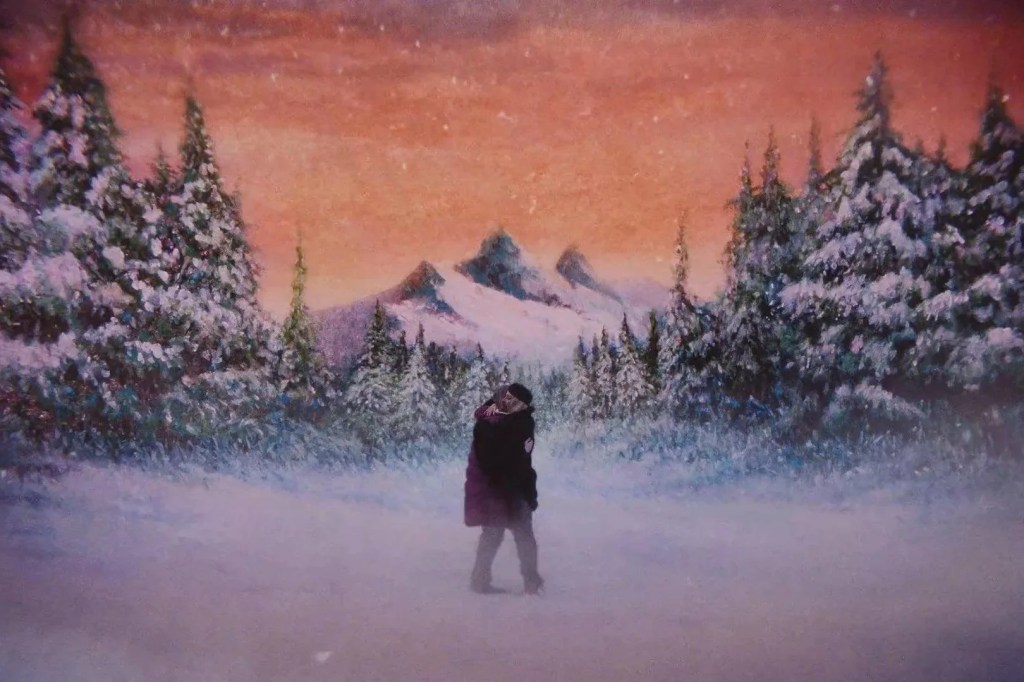
Jane Schoenbrun is so singular in their understanding of dissociation. There’s something deeply specific about the way they approach characters who have spent so much of their lives feeling separated from themselves, from their bodies, and from the world around them, and yet somehow they continue to make those feelings feel completely universal. I Saw the TV Glow remains my favorite of their work simply because I found it so devastatingly haunting and damning, but there is an enormous amount to admire within their third feature, Teenage Sex and Death at Camp Miasma. Schoenbrun once again finds horror in the gap between how we perceive ourselves and how we imagine the world perceives us.
Jane recently cited in a Q&A that they were heavily inspired by Jordan Peele’s Nope, and that influence feels particularly apparent in the film’s fascination with voyeurism and spectacle. The film understands that there is an uncomfortable relationship between desire and performance: we want to be seen, but we also want to maintain control over what exactly other people are allowed to see. Eventually, those two impulses become impossible to separate. And it’s within that idea the film truly shines.
The film follows Kris (Hannah Einbinder), an acclaimed independent filmmaker who has been handed the keys to the once-beloved Camp Miasma franchise. These days, the series is little more than a shell of what it once was – merchandise, countless sequels, and increasingly convoluted lore have seemingly buried whatever audiences loved about the original film. Kris, however, believes she can create a reboot that recaptures what made the original so special while still servicing what studio executives expect from IP filmmaking today: young stars, “elevated horror,” and a back-to-basics approach. Her key to unlocking all of this? Bringing back the star of the original film, Billy Presley (Gillian Anderson).
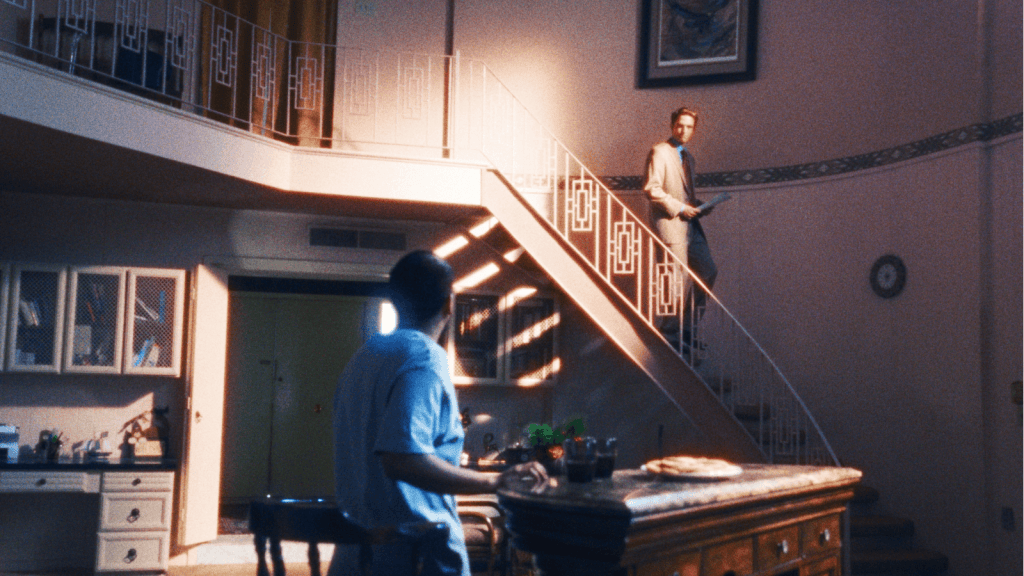
A large majority of the film takes place inside Billy’s home at the original camp where the first Camp Miasma was filmed. While there is an impressive supporting cast at play, the film largely functions as a chamber piece between Gillian Anderson and Hannah Einbinder, both of whom deliver fantastic, deeply intimate performances. The two play off one another beautifully, with Schoenbrun’s screenplay allowing their dynamic to unfold in a way that feels meticulous yet completely organic.
And underneath all of the horror, camp, absurdity, and genre commentary is something surprisingly tender. Without sounding too cornball, the film understands that sometimes the real horror is finding it within yourself to be vulnerable and naked with another human being after a lifetime of derealization and shame. It is terrifying to allow yourself to be genuinely known. It is even more terrifying when you have spent years constructing layers of irony, fantasy, genre references, and intellectualization as a means of protecting yourself from that vulnerability. Yes, even scarier than a psycho killer.
I can’t personally relate to all of the queer themes at the heart of the film, but I find Schoenbrun’s ability to make those themes feel universal to be one of their greatest strengths as a filmmaker. The specificity is what makes the emotions work. This isn’t simply a story about one particular experience of identity or alienation; it’s about the human impulse to retreat inward when the outside world becomes too difficult to reconcile with the person you feel yourself to be. The horror comes from that retreat becoming so complete that you no longer know how to come back. That idea extends beautifully into the film’s obsession with horror itself.
One of the things I loved most is its understanding of the horror franchise as a snake eating its own tail. There’s the beloved original film, the inevitable sequel, the quick turnaround, the merchandising, the diminishing returns, and then the slow death of cheaper and lousier installments until, eventually, some new studio executive decides it’s time to take things “back to basics” with a reboot helmed by a Sundance darling. It’s funny because it’s true, but the joke also contains a genuine sadness. What happens when something you once loved hasn’t been good in years? At what point does nostalgia become indistinguishable from obligation? More importantly: why do we feel the need to justify loving something that might be perceived as schlocky?
The film seems fascinated by that question. How can we love a good, fun slasher flick without immediately trying to intellectualize it to death? Why do we need to explain why something matters to us before we allow ourselves to simply enjoy it? Schoenbrun understands that horror fandom can be intensely personal and sometimes profoundly embarrassing. The things we love as children can become deeply formative of our identity, even when the narrative around them evolves into something more hotly debated and diminished by others over time.
I particularly related to the film’s depiction of being precious about horror movies that most people would consider not very good. I had my own awakening with horror somewhere between the ages of eight and twelve, when I watched far more of it than I probably should have. There’s something incredibly accurate about the way we can latch onto something like a cheesy slasher and treat it as sacred text. You know it’s ridiculous. You might even know it’s bad. But that almost becomes part of the appeal. Maybe, there’s even an art to it.
The film gets at that feeling through food, too, in ways that I found hilarious and oddly poignant. I loved the slow, delicate montage of the chicken going into the sauces, the KFC presented on nice plates with sides carefully arranged in nice bowls. There’s so much emphasis on candy for dinner throughout the film as well. It captures that particular childhood sensation of treating junk food like a delicacy, of turning something cheap and disposable into something precious simply because you have decided it matters. That becomes a surprisingly effective metaphor for horror fandom itself. Maybe loving horror junk food is an art form. Maybe the act of assigning meaning to something that was never designed to have meaning is part of what makes fandom so rewarding in the first place.
And yet, this is also where the film occasionally lost me. My biggest quibble is that it can become a little too irony-pilled for its own good. There are moments when I could feel the film winking at me a little too hard, almost as though it was afraid to let an idea or emotion sit without immediately commenting on it. I found myself wishing, at times, for the restraint of I Saw the TV Glow, where Schoenbrun’s ideas were allowed to linger in the air without necessarily being punctuated by another joke, reference, or flourish. That film’s restraint is part of what made it so haunting to me. But the irony is also part of what makes this film so funny.
There are stretches where I was laughing consistently. There is an amusing sequence full of studio execs on a Zoom call that feels dangerously real to the conversations we know real-life studio execs are having daily, and the gag about Kris’ first feature-length film being a remake of Psycho from the perspective of the shower curtain is really sticking with me. The opening credits are also fantastic. These moments demonstrate how clearly Schoenbrun understands not only horror but the people who love horror – the way genre fans simultaneously revere, mock, dissect, and completely lose themselves in the things they love.
That tension is ultimately what makes the film work for me. It is about the danger of intellectualizing everything, while itself being an incredibly intellectualized work of art in itself. It asks whether we can simply love something without needing to explain it, while spending much of its runtime explaining why we love the things we love. It connects our impulse to intellectualize camp horror with our impulse to intellectualize sex, desire, intimacy, and connection. We turn everything into a text because texts are easier to understand than feelings. Feelings are messy. Desire is messy. Vulnerability is terrifying. A slasher movie, at least, has rules.
That contradiction gives the film a surprising emotional center beneath all of its irony. For all its jokes about horror fandom and Hollywood’s endless cycle of recycling intellectual property, this is ultimately a movie about why we cling to the things that made us feel something in the first place. Schoenbrun doesn’t simply understand horror as a genre. They understand horror as a language through which people can process feelings they don’t otherwise know how to articulate. The monsters, the spectacle, the camp, the franchise mythology, the junk food, the gore; none of it is meaningless – but at the end of the day, it is all play. Just like sex and vulnerability. Maybe if we can find the movies less scary when we realize they aren’t real, maybe we can realize the idea of connecting authentically with others isn’t as well.



Leave a comment